

- Undergraduate
Bachelor's Degrees
Bachelor of ArtsBachelor of EngineeringDual-Degree ProgramUndergraduate AdmissionsUndergraduate Experience
Quick Links
- Graduate
- Research
Research by Program Area
Quick Links
All Thayer Events
Jones Seminar: Macroscopic Quantum Coherence—From fundamental science to quantum computing
Jan
09
Spanos Auditorium/ Online
At the dawn of the 20th century, quantum mechanics replaced continuous descriptions of physical systems with discrete, quantized models. A notable example occurs in electromagnetism, where continuous waves become discrete packets of energy called photons. However, quantum effects generally appear only when a few excitations are present. For instance, in our everyday world, electromagnetic radiation involves vast numbers of photons, making light appear as continuous classical waves. This leads to a fundamental question: what is the largest object that can display quantum mechanical effects? While individual atoms and subatomic particles clearly show quantum behavior, superconductivity provides a remarkable pathway to macroscopic quantum phenomena, allowing large pieces of material (containing roughly 10^23 atoms) to act as a single coherent quantum entity. In the late 1980s, pioneers John Clarke, Michel Devoret, and John Martinis demonstrated that macroscopic superconducting circuits could exhibit quantized energy levels, absorbing distinct, countable numbers of photons like individual atoms. This surprising result was recently recognized with the 2025 Nobel Prize in Physics.
In this talk, I will discuss the major achievements of this groundbreaking work and explore the incredible array of technologies that have emerged from it, including quantum computing, ultra-sensitive amplifiers, and detectors, all arising from this pioneering demonstration of macroscopic quantum behavior.
Hosted by Professor Benoit Cushman-Roisin
About the Speaker(s)
Mattias Fitzpatrick
Assistant Professor of Engineering, Dartmouth
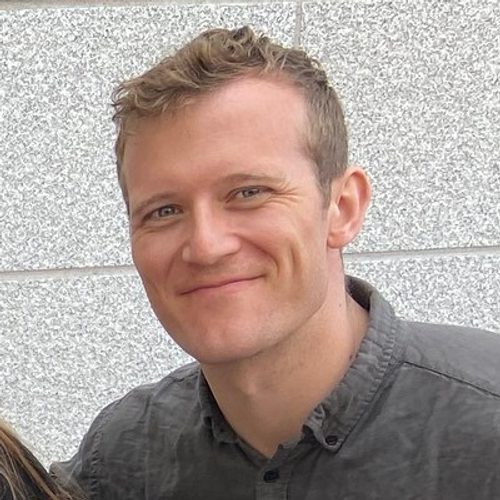
Mattias Fitzpatrick has dedicated his entire professional career to various quantum technologies. As an undergraduate at Middlebury, Mattias contributed to research on semiconductor spin qubits in the Marcus Lab at Harvard and at the Niels Bohr Institute. During his postgraduate studies, he worked under the supervision of Andrew Houck at Princeton University. There, he employed the principles of macroscopic quantum coherence, the subject of the 2025 Nobel Prize in Physics, in the context of extensive arrays of superconducting cavities and resonators. After earning his PhD, Mattias pursued an intelligence community postdoctoral fellowship at Princeton, collaborating with Nathalie de Leon on quantum sensing using Nitrogen Vacancy Centers in diamond. While a postdoc, Mattias also developed a Tantalum-based material platform for superconducting circuits, which has become widely adopted across the superconducting circuit community. Following his postdoc, Mattias worked on industrial-scale quantum processors at IBM until joining the faculty at Thayer where he investigates so-called two-level-system defects in superconducting materials.
Contact
For more information, contact Amos Johnson at amos.l.johnson@dartmouth.edu .