




- Undergraduate
Bachelor's Degrees
Bachelor of ArtsBachelor of EngineeringDual-Degree ProgramUndergraduate AdmissionsUndergraduate Experience
Quick Links
- Graduate
- Research
Research by Program Area
Quick Links
All Thayer Events
Jones Seminar: Artificial Intelligence Tools for Protein Engineering
Feb
27
Spanos Auditorium/ Online
Artificial intelligence (AI) algorithms have unlocked incredible possibilities for biomolecular engineering. In this talk, I will share advances from my lab in antibody engineering and protein-protein docking. Some neural network models (CNNs and multi-track transformer networks) outperform physical models for antibody structure prediction, while property prediction remains challenging. Generative language models offer multiple promising routes for design of antibody therapeutics, but they produce repertoire distributions different than those produced with heuristic, gene-recombination and somatic-mutation models. AI docking methods could reveal biological mechanisms and allow for screening of potential therapeutics. We probe how to extract a thermodynamic-like energy function from denoising diffusion models. We envision a future where AI methods can be combined with physics for powerful and interpretable biomolecular engineering.
Hosted by professors Jiwon Lee & Emme Burgin.
About the Speaker(s)
Jeffrey Gray
Professor of Chemical & Biomolecular Engineering, Johns Hopkins U
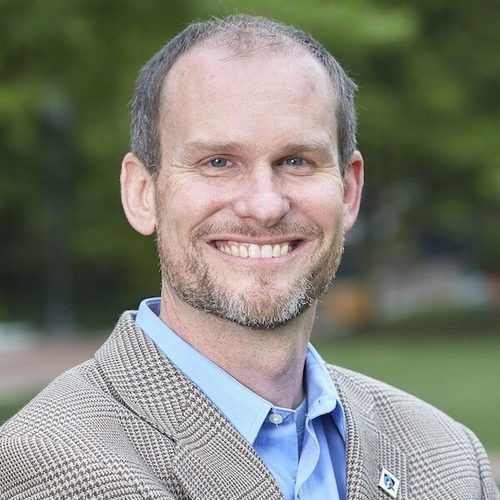
Jeffrey J. Gray is a professor of chemical and biomolecular engineering at Johns Hopkins University, with joint appointments in the Data Science and AI Institute, the Program in Molecular Biophysics, and the Sidney Kimmel Comprehensive Cancer Center (Oncology). He earned his BSE in chemical engineering at the University of Michigan and his PhD in chemical engineering at the University of Texas at Austin, and he completed post-doctoral training at the University of Washington. His research focuses on computational protein structure prediction and design, particularly protein-protein docking, antibody engineering, membrane proteins, protein-carbohydrate interactions, and deep learning.
Contact
For more information, contact Amos Johnson at amos.l.johnson@dartmouth.edu .