






- Undergraduate
Bachelor's Degrees
Bachelor of ArtsBachelor of EngineeringDual-Degree ProgramUndergraduate AdmissionsUndergraduate Experience
Quick Links
- Graduate
- Research
Research by Program Area
Quick Links
All Thayer Events
Conducting Polymer Devices to Study the Gut-Brain Axis
Jun
18
Rm 132 , Maclean ESC/ Online
Conducting polymer devices have been shown to be particularly suited for interfacing with biological systems for non-invasive monitoring, in a multitude of applications in health and disease. Our group has interfaced conducting polymers with biological systems at multiple length scales from the cell membrane through to entire organs.
In this talk I'll showcase the interfacing of devices with cells, tissues and organs highlighting their diversity and tunability. Electrical impedance spectroscopy offers label-free, continuous, high content information on real time changes in tissues. Unlike traditional electrodes, conducting polymer electrodes bring advantages in terms of improved interfacing with biology, mixed electronic and ionic conduction, increased versatility in terms of fabrication due to liquid formulation (e.g. conformability, transparency, 3-dimensionality etc) and enhanced signal to noise ratio. Bringing together principles of materials science, tissue engineering, 3D cell biology and bioelectronics, I will showcase conformable electrodes we've developed for both monitoring of complex in vitro gut models, and validation with rodent tissues. These devices allow highly sensitive monitoring of impedance of the tissue (as an indicator of gut health). Secondly, I'll discuss conformable electronic devices we've developed for both ex-situ measurements of GI tissue from rats, as well as in vivo experiments in live rats. These devices allow highly sensitive monitoring of impedance of the tissue (as an indicator of gut health) as well as the enteric nervous system.
About the Speaker(s)
Róisín Owens
Professor of Bioelectronics, University of Cambridge
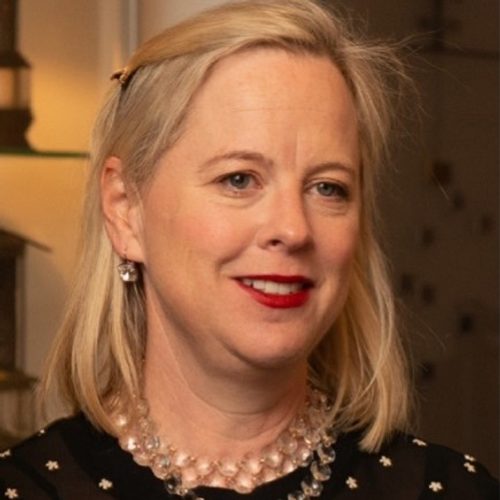
Róisín M. Owens is professor of bioelectronics at the Dept. of Chemical Engineering and Biotechnology at the University of Cambridge and a fellow of Newnham College. She received her BA in natural sciences at Trinity College Dublin, and her PhD in biochemistry and molecular biology at Southampton University. She carried out two postdoc fellowships at Cornell University on host-pathogen interactions. She is a 2019 laureate of the Suffrage Science award and was awarded the Biochemical Society AstraZeneca prize in 2024. She serves as scientific editor for Materials Horizons (RSC). She is author of 150+ publications and three patents and her work has been cited more than 14,000 times.
Contact
For more information, contact Alex Boys at alex.boys@dartmouth.edu .