



- Undergraduate
Bachelor's Degrees
Bachelor of ArtsBachelor of EngineeringDual-Degree ProgramUndergraduate AdmissionsUndergraduate Experience
Quick Links
- Graduate
- Research
Research by Program Area
Quick Links
All Thayer Events
AI Tools for Person-Centered Dementia Care in Resource-Constrained Facilities
Feb
12
WTRB 571 TDI/ Online
All are welcome to this Synergy Translational and Learning Health System Science Collaborative Series event hosted by Dartmouth SYNERGY Clinical and Translational Science Institute.
Abstract: The growing burden of dementia places intense strain on long-term care facilities with limited resources, where staff turnover, fragmented documentation, and inconsistent family engagement pose major barriers to person-centered care. In this talk, I will describe work conducted in close partnership with seven long-term care facilities in the Northeastern US, where our formative fieldwork guided the design of AI-enabled tools that synthesize multimodal care data (e.g., notes, video) into resident-specific insights and actionable feedback aligned with existing caregiving workflows. Deployment of these tools showed their potential to reduce documentation burden, improve situational awareness and continuity of care, and strengthen trust among caregivers and families, without increasing staff workload.
Free lunch provided on a first-come basis.
About the Speaker(s)
Elizabeth Murnane
Charles H. Gaut & Charles A. Norberg Assistant Professor of Engineering, Dartmouth
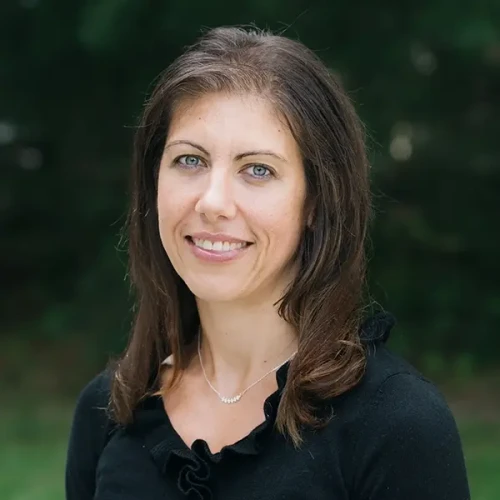
Professor Murnane specializes in human factors, information science, and human-computer interaction, with a focus on applications in public health, STEM education, and environmental sustainability. The bulk of her research is in the domain of digital health, with an emphasis on developing personal informatics tools that promote patient experience and health equity. At Dartmouth, she founded and directs the Empower Lab, a team of students and research scientists working together to create behavioral intervention technologies that aim to positively shape knowledge, attitudes, and actions through a user-empowerment approach. The lab explores the design of various form factors, information formats, and interaction paradigms (e.g., games, toys, tangibles, musical interfaces, narratives, AR/VR/XR, psychotherapeutic visualization, socially assistive robots, and more) that are sensitive to the needs of traditionally underserved populations.