





On This Page
- Undergraduate
Bachelor's Degrees
Bachelor of ArtsBachelor of EngineeringDual-Degree ProgramUndergraduate AdmissionsUndergraduate Experience
Quick Links
- Graduate
- Research
Research by Program Area
Quick Links
Undergraduate
Undergraduate Experience
Quick Links
Graduate
Additional PhD Options
Graduate Experience
Quick Links
Research
Research by Program Area
Quick Links
Bachelor's Degrees
Undergraduate Experience
Quick Links
Research by Program Area
Quick Links
CEDC projects form the heart of Dartmouth's capstone BE design course sequence, ENGS 89: Engineering Design Methodology and Project Initiation and ENGS 90: Engineering Design Methodology and Project Completion. Each project runs from mid-September to early March with students working in teams of three to eight depending on the scope of the project.
Students in Dartmouth's MEng degree program may elect to complete an industry-sponsored project through the advanced course sequence, ENGG 199.1: Master of Engineering Design Project Initiation and ENGG 199.11: Master of Engineering Design Project Completion. Projects are matched to student teams in October/November with work beginning in early January and completing at the end of May.

An 89/90 capstone project team—Will Clendenning Th'24, Chad Klaas '24 Th'25, Samantha Melgar '24, and Ismael Rosales-Albarran '24—along with co-author and CEDC Director Emily Monroe, published their project results titled, "Using Life Cycle Assessments to Measure the Environmental Impact of Alternative Care Models in the Neonatal Intensive Care Unit" in the International Journal of Environmental Research and Public Health. The team compared traditional hospital NICUs against "Hope Grows at Home," a home-care model for premature infants. Although other evidence shows no difference in health outcomes, their assessment showed significant reductions in both carbon emissions and solid waste by shifting to the home-care model.
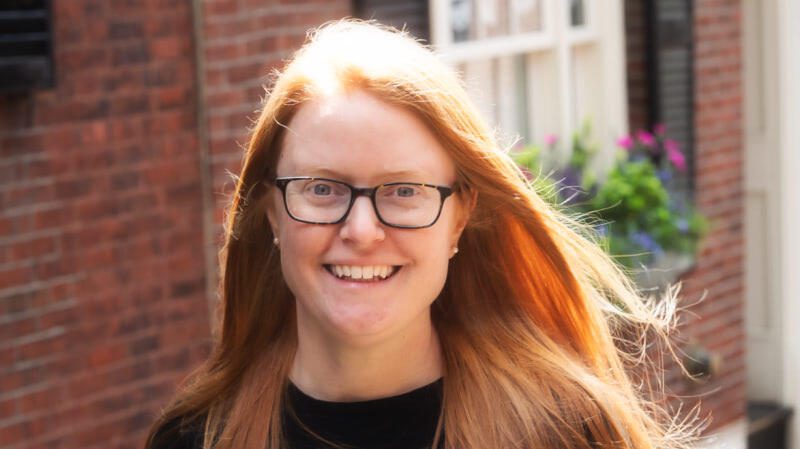
As CEDC director, Emily leverages her experience to connect industry sponsors with Dartmouth Engineering students. Prior to joining Dartmouth, Emily was the lead engineer at Kudos, where she ran new product development for the first disposable baby diaper with 100% cotton against baby’s skin. She also served as a manufacturing engineer at Sturm, Ruger and Co. and as an R&D design engineer at Johnson&Johnson's Ethicon Endo-Surgery.
Emily is a licensed professional engineer (PE) and holds a BS degree in mechanical engineering from MIT and an MEM degree from Duke University. She is a member of Tau Beta Pi and Phi Beta Kappa honor societies.
Outside the CEDC, she is an avid reader and Lego builder, a parent of five young children, and a process improvement superfan.
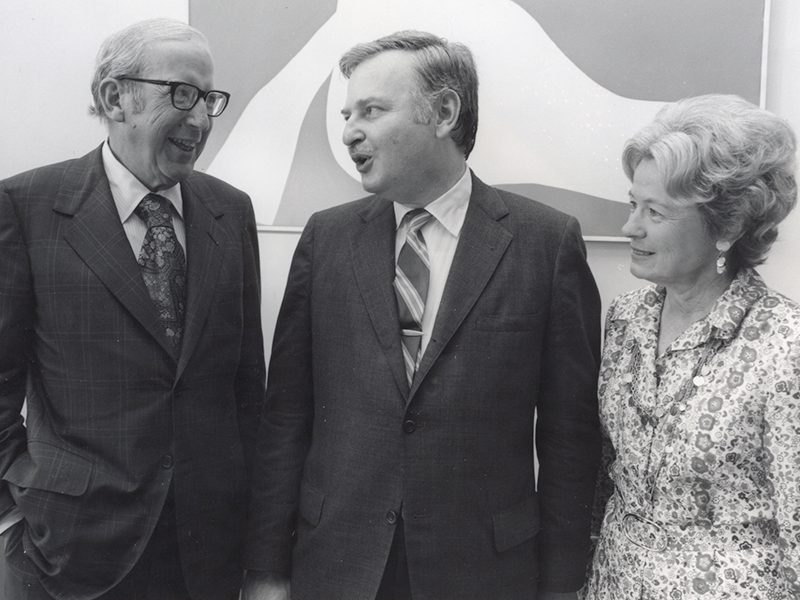
CEDC was established in 1978 to create a bridge between industry and Thayer. Several companies signed on to provide financial support and bring in projects for graduate engineering students, who would work in close collaboration with industry representatives.
Former board member John Brown Cook '29 (pictured above on the left) was an early and enthusiastic supporter of CEDC. After Cook's death in 1979, his widow, Marian Miner Cook (pictured above on the right), succeeded him on the board and made a significant financial gift to CEDC. Originally called INVENTE, CEDC was then renamed. Seen here with former Dartmouth President John G. Kemeny (pictured above in the center).

During its first five years (1979–1984), more companies joined with an increase in industry-funded research. The Cook Center Associates Program was established in 1983 as a mechanism to generate and maintain a continuing relationship with interested companies.
During the tenure of Dean Elsa Garmire (pictured above), CEDC became a virtual center with a formalized fee structure for projects and processes by which corporate partners were recruited.


